Roma Nuda - Fraco Califano
m'attacco a 'sta città che s'è addormita già da 'n ora
cammino su de lei, su strade uguali a pelle scura
si poi se sveglierà, io certo nun glie posso fa' paura...
Roma nuda...
scusa si perdo lacrime pe' strada
mal che vada fa finta che so' gocce de rugiada
piuttosto che sta' solo dentro al letto
vado randagio in quarche vicoletto
cammino a piedi scarzi, armeno finchè t'arzi
dormi e vedrai che manco me sentirai
Roma nuda...
nun me poi di' de no , so' disperato
casa è vota, c'era 'na donna che m'ha rovinato
Me basta sta' così all'angoletto de 'sta strada
chissà che a dormì qui domani io nun m'enventi 'n artra vita.
Roma nuda...
Me basta sta' così all'angoletto de 'sta strada
chissà che a dormì qui domani io nun m'enventi 'n artra vita.
Roma nuda... Roma nuda...
Roma nuda...
Sway with me - Dean Martin
Dance with me, make me sway
Like a lazy ocean hugs the shore
Hold me close, sway me more
Like a flower bending in the breeze
Bend with me, sway with ease
When we dance you have a way with me
Stay with me, sway with me
Other dancers may be on the floor
Dear, but my eyes will see only you
Only you have the magic technique
When we sway I go weak
I can hear the sounds of violins
Long before it begins
Make me thrill as only you know how
Sway me smooth, sway me now
Other dancers may be on the floor
Dear, but my eyes will see only you
Only you have the magic technique
When we sway I go weak
I can hear the sounds of violins
Long before it begins
Make me thrill as only you know how
Sway me smooth, sway me now
You know how
Sway me smooth, sway me now
La Maritza - Sylvie Vartan
La Maritza c'est ma rivière
Comme la Seine est la tienne
Mais il n'y a que mon père
Maintenant qui s'en souvienne
Quelquefois
De mes dix premières années
Il ne me reste plus rien
Pas la plus pauvre poupée
Plus rien qu'un petit refrain
D'autrefois :
La la la la...
Tous les oiseaux de ma rivière
Nous chantaient la liberté
[ Find more Lyrics on http://mp3lyrics.org/asLQ ]
Moi je ne comprenais guère
Mais mon père, lui, savait
Ecouter
Quand l'horizon s'est fait trop noir
Tous les oiseaux sont partis
Sur les chemins de l'espoir
Et nous on les a suivis,
A Paris
[Parlé]
De mes dix premières années
Il ne reste plus rien... rien
[Chanté]
Et pourtant les yeux fermés
Moi j'entends mon père chanter
Ce refrain :
La la la la
Steppenwolf - Hermann Hesse
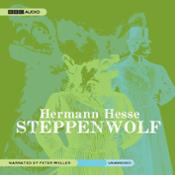
خوندن گرگ دشت به ارزشمندی یه کشف بود ولی تصادفی نبود. من وقتی خوندمش اینو فهمیدم. باور کن تصادفی نبود، برنامه ریزی شده بود. باشه، هیچ دلیلی ندارم که بهت نشون بدم که کسی الان خوندنش رو واسم برنامه ریزی کرده بود ولی این رو کاملا حس می کنم.
خوندن یونگ کمتر اتفاقی بود. خیلی وقت بود انسان و نمادهایش رو که به سفارش شایان از ایران آورده بودم که بخونم خاک می خورد ولی تو برنامهم بود. به هر حال هنوز هم نخوندمش. ولی وقتی کسی توجهم رو به موضوع اختلال شخصیت مرزی جلب کرد دوباره و دوباره نیازم رو به شناخت خودم متوجه شدم. و اگه قرار بود خودم رو از خلال کسی بشناسم اولین انتخابم یونگ بود. این شد که یونگ رو خوندم.
خوندن هسه رو خیلی اتفاقی شروع کردم، وقتی فکر کردم موقع اینه که وقت ورزش به چیزی گوش بدم. اولین و شاید تنها چیزی که روی کتاب های صوتی آیفونم توجهم رو جلب کرد سیذارتای هسه بود. دلنواز بود و عمیق. بعد رفتم سراغ کتابهای دیگش و بعد شد گرگ دشت.
همهی اینا چندان عیرعادی نبود. وقتی به فصل دوم گرگ دشت یعنی «رسالهای بر گرگ دشت » رسیدم حس غریبی پیدا کردم. ادامهی رمان این حس رو تو من ایجاد کرد که تو خودم غلت می خورم. این حس رو داد که یونگ تو این کتاب است. Self, Anima, Shadow, Persona همه اینجا جمع شده بودند. کسی با چاقوی یونگ داشت خودش رو تشریح می کرد، شاید هم داشت من رو تشریح می کرد. اینجا بود که معجزه شده بود. دو مسیر کاملا بی ربط به هم رسیده بودن. طولی نکشید که فهمیدم هسه تو دورهی قبل از نوشتن کتاب تحت روانکاوی یونگ قرار گرفته بوده و یونگ معتقد بوده که این کتاب و چند کتاب دیگه تحت تاثیر تئوری های اون نوشته شده بودن.
گرگ دشت یکی از مهمترین کتابهاییه که تو زندگیم خوندم.
The Final Scene
Mozart looked at me with intolerable mockery.
"How pathetic you always are. But you will learn humor yet,
Harry. Humor is always gallows-humor, and it is on the gallows you are
now constrained to learn it. You are ready? Good. Then off with you to
the public prosecutor and let the law take its course with you till your
head is coolly hacked off at break of dawn in the prison yard. You are
ready for it?"
Instantly a notice flashed before my eyes:
HARRY'S EXECUTION
and I consented with a nod. I stood in a bare yard enclosed by four walls with barred windows, and shivered in the air of a gray dawn. There were a dozen gentlemen there in morning coats and gowns, and a newly erected guillotine. My heart was contracted with misery and dread, but I was ready and acquiescent. At the word of command I stepped forward and at the word of command I knelt down. The public prosecutor removed his cap and cleared his throat and all the other gentlemen cleared their throats. He unfolded an official document and held it before him and read out:
"Gentlemen, there stands before you Harry Haller, accused and found guilty of the willful misuse of our Magic Theater. Haller has not alone insulted the majesty of art in that he confounded our beautiful picture gallery with so-called reality and stabbed to death the reflection of a girl with the reflection of a knife; he has in addition displayed the intention of using our theater as a mechanism of suicide and shown himself devoid of humor. Wherefore we condemn Haller to eternal life and we suspend for twelve hours his permit to enter our theater. The penalty also of being laughed out of court may not be remitted. Gentlemen, all together, one-two-three!"
On the word "three" all who were present broke into one simultaneous peal of laughter, a laughter in full chorus, a frightful laughter of the other world that is scarcely to be borne by the ears of men.
When I came to myself again, Mozart was sitting beside me as before. He clapped me on the shoulder and said: "You have heard your sentence. So, you see, you will have to learn to listen to more of the radio music of life. It'll do you good. You are uncommonly poor in gifts, a poor blockhead, but by degrees you will come to grasp what is required of you. You have got to learn to laugh. That will be required of you. You must apprehend the humor of life, its gallows-humor. But of course you are ready for everything in the world except what will be required of you. You are ready to stab girls to death. You are ready to be executed with all solemnity. You would be ready, no doubt, to mortify and scourge yourself for centuries together. Wouldn't you?"
"Oh, yes, ready with all my heart," I cried in my misery.
"Of course! When it's a question of anything stupid and pathetic and devoid of humor or wit, you're the man, you tragedian. Well, I am not. I don't care a fig for all your romantics of atonement. You wanted to be executed and to have your head chopped off, you lunatic! For this imbecile ideal you would suffer death ten times over. You are willing to die, you coward, but not to live. The devil, but you shall live! It would serve you right if you were condemned to the severest of penalties."
"Oh, and what would that be?"
"We might, for example, restore this girl to life again and marry you to her."
"No, I should not be ready for that. It would bring unhappiness."
"As if there were not enough unhappiness in all you have designed already! However, enough of pathos and death-dealing. It is time to come to your senses. You are to live and to learn to laugh. You are to learn to listen to the cursed radio music of life and to reverence the spirit behind it and to laugh at its distortions. So there you are. More will not be asked of you."
Gently from behind clenched teeth I asked: "And if I do not submit? And if I deny your right, Mozart, to interfere with the Steppenwolf, and to meddle in his destiny?"
"Then," said Mozart calmly, "I should invite you to smoke another of my charming cigarettes." And as he spoke and conjured up a cigarette from his waistcoat pocket and offered it me, he was suddenly Mozart no longer. It was my friend Pablo looking warmly at me out of his dark exotic eyes and as like the man who had taught me to play chess with the little figures as a twin.
"Pablo!" I cried with a convulsive start. "Pablo, where are we?"
"We are in my Magic Theater," he said with a smile, "and if you wish at any time to learn the Tango or to be a general or to have a talk with Alexander the Great, it is always at your service. But I'm bound to say, Harry, you have disappointed me a little. You forgot yourself badly. You broke through the humor of my little theater and tried to make a mess of it, stabbing with knives and spattering our pretty picture-world with the mud of reality. That was not pretty of you. I hope, at least, you did it from jealousy when you saw Hermine and me lying there. Unfortunately, you did not know what to do with this figure. I thought you had learned the game better. Well, you will do better next time."
He took Hermine who at once shrank in his fingers to the dimensions of a toy figure and put her in the very same waistcoat pocket from which he had taken the cigarette.
Its sweet and heavy smoke diffused a pleasant aroma. I felt hollow, exhausted, and ready to sleep for a whole year.
I understood it all. I understood Pablo. I understood Mozart, and somewhere behind me I heard his ghastly laughter. I knew that all the hundred thousand pieces of life's game were in my pocket. A glimpse of its meaning had stirred my reason and I was determined to begin the game afresh. I would sample its tortures once more and shudder again at its senselessness. I would traverse not once more, but often, the hell of my inner being.
One day I would be a better hand at the game. One day I would learn how to laugh. Pablo was waiting for me, and Mozart too.
HOW ONE KILLS FOR LOVE?
I opened it. What I saw was a simple and beautiful picture. On a rug on the floor lay two naked figures, the beautiful Hermine and the beautiful Pablo, side by side in a sleep of deep exhaustion after love's play. Beautiful, beautiful figures, lovely pictures, wonderful bodies. Beneath Hermine's left breast was a fresh round mark, darkly bruised—a love bite of Pablo's beautiful, gleaming teeth. There, where the mark was, I plunged in my knife to the hilt. The blood welled out over her white and delicate skin. I would have kissed away the blood if everything had happened a little differently. As it was, I did not. I only watched how the blood flowed and watched her eyes open for a little moment in pain and deep wonder. What makes her wonder? I thought. Then it occurred to me. that I had to shut her eyes. But they shut again of themselves. So all was done. She only turned a little to one side, and from her armpit to her breast I saw the play of a delicate shadow. It seemed that it wished to recall something, but what I could not remember. Then she lay still.
Steppenwolf
روایت باززایی - ۱۲
When I came to myself I was bewildered and exhausted. The white light of
the corridor shone in the polished floor. I was not among the
immortals, not yet. I was still, as ever, on this side of the riddle of
suffering, of wolf-men and torturing complexities. I had found no happy
spot, no endurable resting place. There must be an end of it.
In the great mirror, Harry stood opposite me. He did not appear
to be very flourishing. His appearance was much the same as on that
night when he visited the professor and sat through the dance at the
Black Eagle. But that was far behind, years, centuries behind. He had
grown older. He had learned to dance. He had visited the magic theater.
He had heard Mozart laugh. Dancing and women and knives had no more
terrors for him. Even those who have average gifts, given a few hundred
years, come to maturity. I looked for a long time at Harry in the
looking glass. I still knew him well enough, and he still bore a faint
resemblance to the boy of fifteen who one Sunday in March had met Rosa
on the cliffs and taken off his school cap to her. And yet he had grown a
few centuries older since then. He had pursued philosophy and music and
had his fill of war and his Elsasser at the Steel Helmet and discussed
Krishna with men of honest learning. He had loved Erica and Maria, and
had been Hermine's friend, and shot down motorcars, and slept with the
sleek Chinese, and encountered Mozart and Goethe, and made sundry holes
in the web of time and rents in reality's disguise, though it held him a
prisoner still. And suppose he had lost his pretty chessman again,
still he had a fine blade in his pocket. On then, old Harry, old weary
loon.
Bah, the devil—how bitter the taste of life! I spat at Harry in
the looking glass. I gave him a kick and kicked him to splinters ....
بابای گنجشکها
همیشه عاشق گنجشک ها خواهم بود، قول می دهم مواظب باشم "این زبان بسته ها" گشنه نمانند. صدایشان را می شنوم که برگشته اند و فکر می کنم تو برگشته ای. امروز می روم برایشان دانه می خرم می گذارم توی بالکن. ولی فکر می کنی همانطور که سر سفرهی تو می آمدند سراغ من هم خواهند آمد؟
دلم برایت تنگ شده، خیلی دلتنگت هستم. دوست دارم وقتی می آیم بازهم باشی. خودت هم خوب می دانی که باورم نمی شود که نباشی. پس لطفا باش. دوستت دارم آغا. خیلی دوستت دارم آغا.
من و گنجشکای خونه
دیدنت عادتمونه
پ.ن. اینو که نوشتم نتونستم آروم باشم. زدم زیر گریه. زنگ زدم به مامان. بنده خدا کلی ترسید که ساعت چار صبح زنگ زدم. ولی خوشحالم که بهش زنگ زدم. بهش گفتم چقدر دلم واسه بابا تنک شده. گریه کردم. آروم شدم.
Radio versus Life
Then the door of the box opened and in came Mozart. I did not recognize
him at the first glance, for he was without pigtail, knee breeches and
buckled shoes, in modern dress. He took a seat close beside me, and I
was on the point of holding him back because of the blood that had
flowed over the floor from Hermine's breast. He sat there and began
busying himself with an apparatus and some instruments that stood beside
him. He took it very seriously, tightening this and screwing that, and I
looked with wonder at his adroit and nimble fingers and wished that I
might see them playing a piano for once. I watched him thoughtfully, or
in a reverie rather, lost in admiration of his beautiful and skillful
hands, warmed too, by the sense of his presence and a little
apprehensive as well. Of what he was actually doing and of what it was
that he screwed and manipulated, I took no heed whatever.
I soon found, however, that he had fixed up a radio and put it
in going order, and now he inserted the loudspeaker and said: "Munich is
on the air. Concerto Grosso in F Major by Handel."
And in fact, to my indescribable astonishment and horror, the
devilish tin trumpet spat out, without more ado, a mixture of bronchial
slime and chewed rubber; that noise that owners of gramophones and
radios have agreed to call music. And behind the slime and the croaking
there was, sure enough, like an old master beneath a layer of dirt, the
noble outline of that divine music. I could distinguish the majestic
structure and the deep wide breath and the full broad bowing of the
strings.
"My God," I cried in horror, "what are you doing, Mozart? Do you
really mean to inflict this mess on me and yourself, this triumph of
our day, the last victorious weapon in the war of extermination against
art? Must this be, Mozart?"
How the weird man laughed! And what a cold and eerie laugh! It
was noiseless and yet everything was shattered by it. He marked my
torment with deep satisfaction while he bent over the cursed screws and
attended to the tin trumpet. Laughing still, he let the distorted, the
murdered and murderous music ooze out and on; and laughing still, he
replied:
"Please, no pathos, my friend! Anyway, did you observe the
ritardando? An inspiration, eh? Yes, and now you tolerant man, let the
sense of this ritardando touch you. Do you hear the basses? They stride
like gods. And let this inspiration of old Handel penetrate your
restless heart and give it peace. Just listen, you poor creature, listen
without either pathos or mockery, while far away behind the veil of
this hopelessly idiotic and ridiculous apparatus the form of this divine
music passes by. Pay attention and you will learn something. Observe
how this crazy funnel apparently does the most stupid, the most useless
and the most damnable thing in the world. It takes hold of some music
played where you please, without distinction, stupid and coarse,
lamentably distorted, to boot, and chucks it into space to land where it
has no business to be; and yet after all this it cannot destroy the
original spirit of the music; it can only demonstrate its own senseless
mechanism, its inane meddling and marring. Listen, then, you poor thing.
Listen well. You have need of it. And now you hear not only a Handel
who, disfigured by radio, is, all the same, in this most ghastly of
disguises still divine; you hear as well and you observe, most worthy
sir, a most admirable symbol of all life. When you listen to radio you
are a witness of the everlasting war between idea and appearance,
between time and eternity, between the human and the divine. Exactly, my
dear sir, as the radio for ten minutes together projects the most
lovely music without regard into the most impossible places, into
respectable drawing rooms and attics and into the midst of chattering,
guzzling, yawning and sleeping listeners, and exactly as it strips this
music of its sensuous beauty, spoils and scratches and beslimes it and
yet cannot altogether destroy its spirit, just so does life, the
so-called reality, deal with the sublime picture-play of the world and
make a hurley-burley of it. It makes its unappetizing tone—slime of the
most magic orchestral music. Everywhere it obtrudes its mechanism, its
activity, its dreary exigencies and vanity between the ideal and the
real, between orchestra and ear. All life is so, my child, and we must
let it be so; and, if we are not asses, laugh at it. It little becomes
people like you to be critics of radio or of life either. Better learn
to listen first! Learn what is to be taken seriously and laugh at the
rest. Or is it that you have done better yourself, more nobly and fitly
and with better taste? Oh, no, Mr. Harry, you have not. You have made a
frightful history of disease out of your life, and a misfortune of your
gifts. And you have, as I see, found no better use for so pretty, so
enchanting a young lady than to stick a knife into her body and destroy
her. Was that right, do you think?"
Steppenwolf
روایت باززایی - ۱۱
I was now, as I perceived, that good-looking and ardent boy whom I had
seen making so eagerly for love's door. I was living a bit of myself
only—a bit that in my actual life and being had not been expressed to a
tenth or a thousandth part, and I was living it to the full. I was
watching it grow unmolested by any other part of me. It was not
perturbed by the thinker, nor tortured by the Steppenwolf, nor dwarfed
by the poet, the visionary or the moralist. No—I was nothing now but the
lover and I breathed no other happiness and no other suffering than
love. Irmgard had already taught me to dance and Ida to kiss, and it was
Emma first, the most beautiful of them all, who on an autumn evening
beneath a swaying elm gave me her brown breasts to kiss and the cup of
passion to drink.
I lived through much in Pablo's little theater and not a
thousandth part can be told in words. All the girls I had ever loved
were mine. Each gave me what she alone had to give and to each I gave
what she alone knew how to take. Much love, much happiness, much
indulgence, and much bewilderment, too, and suffering fell to my share.
All the love that I had missed in my life bloomed magically in my garden
during this hour of dreams. There were chaste and tender blooms, garish
ones that blazed, dark ones swiftly fading. There were flaring lust,
inward reverie, glowing melancholy, anguished dying, radiant birth. I
found women who were only to be taken by storm and those whom it was a
joy to woo and win by degrees. Every twilit corner of my life where, if
but for a moment, the voice of sex had called me, a woman's glance
kindled me or the gleam of a girl's white skin allured me, emerged again
and all that had been missed was made good. All were mine, each in her
own way. The woman with the remarkable dark brown eyes beneath flaxen
hair was there. I had stood beside her for a quarter of an hour in the
corridor of an express and afterwards she often appeared in my dreams.
She did not speak a word, but what she taught me of the art of love was
unimaginable, frightful, deathly. And the sleek, still Chinese, from the
harbor of Marseilles, with her glassy smile, her smooth dead-black hair
and swimming eyes—she too knew undreamed-of things. Each had her secret
and the bouquet of her soil. Each kissed and laughed in a fashion of
her own, and in her own peculiar way was shameful and in her own
peculiar way shameless. They came and went. The stream carried them
towards me and washed me up to them and away. I was a child in the
stream of sex, at play in the midst of all its charm, its danger and
surprise. And it astonished me to find how rich my life—the seemingly so
poor and loveless life of the Steppenwolf—had been in the opportunities
and allurements of love. I had missed them. I had fled before them. I
had stumbled on over them. I had made haste to forget them. But here
they all were stored up in their hundreds, and not one missing. And now
that I saw them I gave myself up to them without defence and sank down
into the rosy twilight of their underworld. Even that seduction to which
Pablo had once invited me came again, and other, earlier ones which I
had not fully grasped at the time, fantastic games for three or four,
caught me up in their dance with a smile. Many things happened and many
games, best unmentioned, were played.
When I rose once more to the surface of the unending stream of
allurement and vice and entanglement, I was calm and silent. I was
equipped, far gone in knowledge, wise, expert—ripe for Hermine. She rose
as the last figure in my populous mythology, the last name of an
endless series; and at once I came to myself and made an end of this
fairy tale of love; for I did not wish to meet her in this twilight of a
magic mirror. I belonged to her not just as this one piece in my game
of chess—I belonged to her wholly. Oh, I would now so lay out the pieces
in my game that all was centered in her and led to fulfillment.
SteppenWolf